economic development

“P” IS FOR . . .

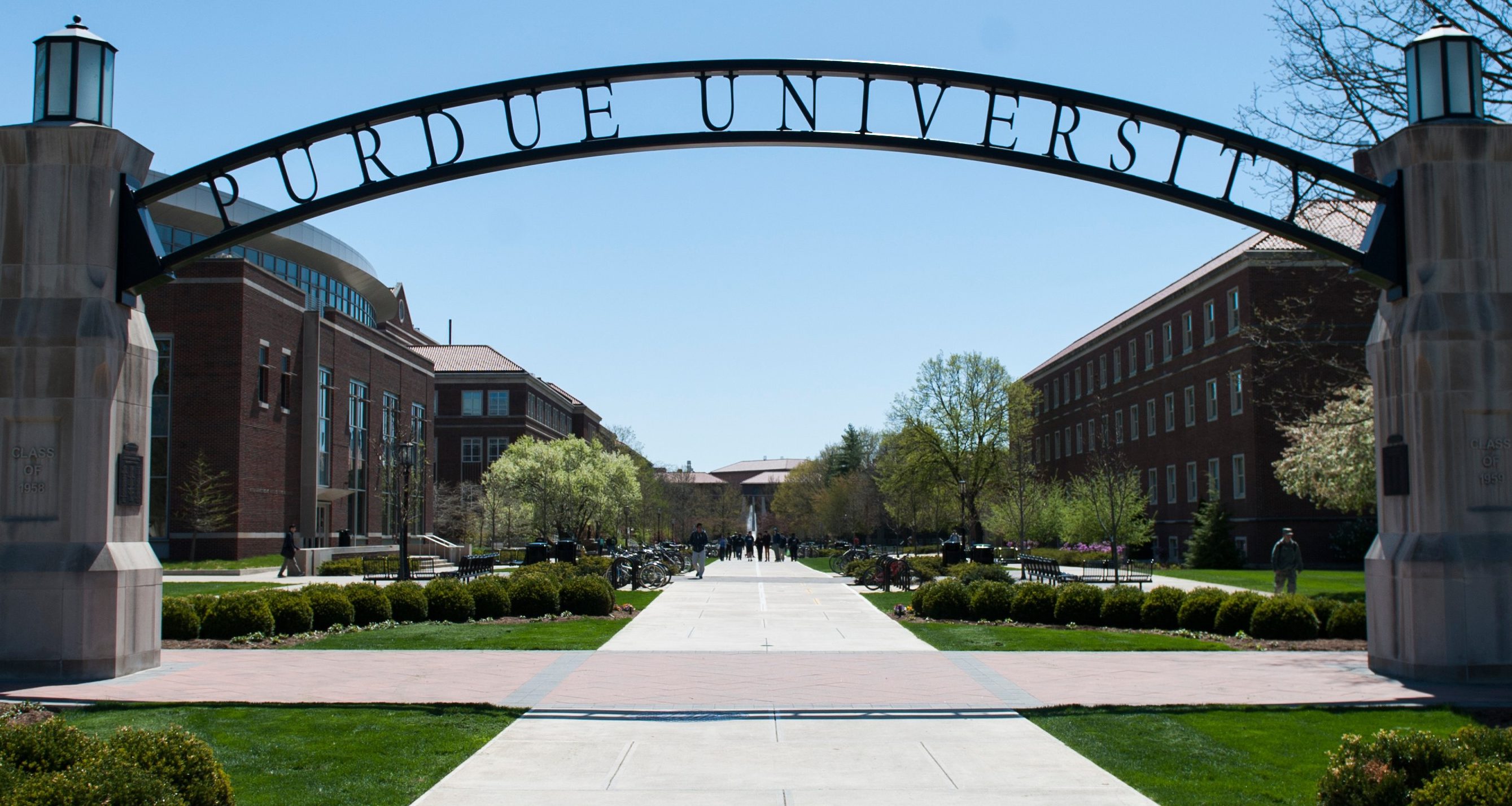
Given the changes in our world in recent weeks, you might think you can guess what my “p” word is. Maybe later! There is a plethora of words I could select for this blog entry (see, there’s one right there), and I hope to highlight a few here. Up until the early part of 2020, those of you who work in economic development and other similar partnership activities, you will know PPP as Public Private Partnership. The PPP with which I have been most closely aligned is the Flagship East building in Anderson where Purdue Polytechnic Anderson has resided since early 2016. Flagship Enterprise Center and the City of Anderson were the primary partners coming together to make this project happen.

PILLARS OF PPP

When I first started my current Purdue position in early 2012, it seemed that what I have always considered the four main pillars–government, commerce, education and not-for-profit—sometimes operated in silos. Within the first few years, I began seeing a marked change, with cooperation and collaboration becoming more the norm as the walls of the silos came down. Had that not been the case, today’s situation and any possibility of recovery would be even more dire.

The acronym PPP in recent weeks now, rather than Public Private Partnership, has come to stand for Paycheck Protection Program. A hallmark of the federal government’s stimulus and recovery program along with SBA federal funding, is intended to provide aid to keep the U.S economy from total collapse.

PARTNERSHIPS

Forging and capitalizing on strategic partnerships has been at the core of my position since day one. Before many of us, myself included, began working from home and had to figure out how to maintain our networks and contacts, this effort was based on being out and about at large events and meetings. Now virtual meetings, Zoom, GoToMeeting, Facebook events, webinars and one-on-one contacts all fold together to become order of the day. Some have embraced it, others are paralyzed by it.

The thing about a partnership is if it was of strategic importance before the world went crazy, it may well be of even more importance during and after the current situation. Think it through, keep relationships open and refreshed, and let things develop as they need to. Take the initiative if your partners don’t. One example for me has been connecting Flagship/Bankable and Startup Ladies, for the purpose of sharing information about PPP and getting funding assistance. By sitting on the boards of both organizations, I was able to see an opportunity to connect the two with, perhaps, some measure of success.

PURDUE

I would be remiss if I didn’t include my employer in a list of “P” words. It has been challenging for me, but much more so for my teaching colleagues taking some 5000 courses online in a very short time period. Earlier this week there were some examples of ways in which videos were utilized for lab experiences. A couple of my favorites were in Construction Management and used HGTV episodes. They challenged students to cite construction code violations and safety violations. Given how fast these HGTV teams typically work, this probably happens more than we realize!

In terms of employee management, the amount of communication has been great as well. Those of us who are not required to be on campus have been allowed to work from home, were told early on that our jobs were secure through the end of the fiscal year (6/30/2020), and have been kept informed about plans for summer and fall. Whatever happens after that, we will work together for the benefit of our students and the state of Indiana.

PANTHERS

My other higher ed partner is Hanover College, home of the Panthers and my undergraduate alma mater. The communication from that quarter has also been exceptional and much appreciated as well. While the numbers of students and courses needing to migrate online were much smaller than for Purdue, the resources to make it happen are much smaller. Hanover was successful in this transition and I was proud, but sad that May term (Spring Term as we called it when I was a student) would have to be a virtual experience.

On a broader perspective, Panthers in the news on a daily basis are Gov. Eric Holcomb and VP Mike Pence. Politics aside, my two fellow Hanoverians are bearing some heavy responsibilities right now and I wish them only the best.

IN CLOSING

Thanks for reading. Looking forward to your comments and connections, both virtual and in person in the not too distant future.  Until next time . . . . stay safe and healthy and remember, this too shall pass.

economic development

OPPORTUNITIES

NOTE: This draft was started prior to the isolation brought about by COVID-19 and finished while sheltering in place.

OPPORTUNITIES

In the earlier stages of my career, the oft-repeated advice (especially to women) was that we needed to learn to say “NO” especially when chasing that elusive work/life balance. As many came to realize, such a balance doesn’t exist, saying “NO” too often brings nothing much more than guilt, and nothing in the way of satisfaction.

Then a couple of decades later, along comes Sheryl Sandberg and her advice to Lean In. Full disclosure, I haven’t read her book nor do many of us aspire to or expect to reach the heights she has. Even so, well before leaning in became a thing, I realized I was better served by knowing when to say “YES” than by learning to say “NO” as we were so often told to do. So what exactly do I mean by that?

Saying “YES” indiscriminately every time you are asked to take on a project, join a board, head up a committee, fill in the blank from your life experience, isn’t what I propose as the way to success. However, if you do so in a strategic manner after first having determined what is important to you and then evaluating the “asks” in light of those priorities, decisions become more easily made. Let me share some examples from the decisions I have made.

Once I determined that my priorities were advancing women in the workplace and STEM education, it became much easier to evaluate projects, committee assignments and requests to sit on boards in light of those priorities. It was also easier for others to understand when I had to decline, more so than “just too busy” that I had used in the past. After retirement (yes, maybe someday), these priorities might change and those OPPORTUNITIES that I declined might be revisited and accepted.

This sort of evaluation can be applied to other life decisions, be it changing careers, launching a business, or any number of pursuits. Now that we are sheltering in place and find ourselves with different OPPORTUNITIES and priorities (or serving them in different ways, perhaps), what are we learning about ourselves and others?

In my case, since my job is almost exclusively based on being out and about, meetings and events both large and small are the norm. That norm is gone for now and electronic communication has taken over. I have had to reinvent what work looks like, as have so many of us who remain employed. For now, my OPPORTUNITIES come in the form of keeping in touch with my key contacts, meeting both individually and collectively with people who are important to me, and checking on how they are faring.

Opportunities are still there, they are just very different. Those of us who remain connected and keep our wits about us through this difficult time have a much better chance of leading through change. Take the opportunity to do things you typically don’t have time to do. No, I don’t necessarily mean clean out the garage or closets (although that might be a good use of time). Spend time reading that business book that has been gathering dust on your bookshelf. Take advantage of some of the webinars that Chambers of Commerce are hosting in lieu of in-person gatherings. Devour your weekly Indianapolis Business Journal instead of skimming it like you typically do each week, then send a link to something you think a friend or colleague would benefit from reading. Then at the end of the workday, walk away and be grateful for what you have accomplished.

IN CLOSING

OPPORTUNITIES abound, sometimes even more so when the chips are down. In an economic downturn, two things typically happen—more people go back to school and more people start their own companies. Granted, these times aren’t typical. However, if you see opportunities in either or both of these ideas, forge ahead! That might be your way through.

Thanks for reading. Looking forward to your comments and connections, both virtual and in person in the not too distant future. Take an OPPORTUNITY or two, strategically selected, when it presents itself! Until next time . . . . stay safe and healthy and remember, this too shall pass.

economic development

(A Salute to) NURSES

Never sure if anybody is reading, or notices if my blogs are missing. I was gone for several months as a result of some personal—health and family—stuff. Hence, picking back up at the letter “N” and a salute to nurses.  We have many friends and family members in this profession, but you really respect and appreciate them when they touch your lives in a very close and personal way.

Early this year I was diagnosed with breast cancer, Stage 0 (didn’t know there was such a thing). Throughout the process of testing, diagnosis, surgery, treatment and follow-up, wonderfully caring and compassionate nurses have been the constant that saw me through.  Yes, the docs were knowledgeable and terrific.  Answered all my questions, often before I knew what they were.  But the nurses were there at every stage and I couldn’t have gotten through it as smoothly without them.

I was fortunate to skip chemo because of the early diagnosis, but learned that radiation is no picnic! The nurses in the treatment center checked in with me periodically.  They made sure I knew all the latest tricks for skin care to minimize burning and to treat it when it did crop up.  They managed my expectations and cheered me on.  They have always been there with smiles and words of encouragement to accompany their professional advice.   I know they had to deal with patients in far worse health then I was, because I saw those patients on a daily basis myself.  Not sure I could stay cheerful every day under those circumstances.

In the middle of my daily radiation treatment, my 90 year old mother decided it was time to move out of her home and look for an assisted living facility. Good thing I had her and my father wait-listed all over town!  A few phone calls later, and they were set up with a place only 10 minutes from my home.  They are settled in and have never regretted it—nor have I.  They have nurses to assist with their meds and to check their vitals and well-being daily.  They both seem to be great friends with the staff that cares for them, and that gives me great peace of mind as well. They both seem to be doing better than they were doing when they were living in their own home, able to entertain friends and family as guests in their new apartment, and I attribute that in large part to the great care they receive from their nursing staff.

IN CLOSING

Those are my personal nurse stories for the early part of this year. But on a broader scale, we need to think of nursing as a career field.  Indiana’s list of “hot jobs” lists nursing at the top of careers that need to be filled now and in the coming years.  In a very real sense, this is a STEM field and is not an easy field of study.  It takes long hours, practical experience with patients, and we want our best and brightest to care for us and our loved ones when we are at our most vulnerable.  Let’s do all we can to encourage those in this field and those considering it.

Join me today in a salute to NURSES.

Thanks for reading. Looking forward to your comments and connections, both virtual and in person.  Next up, “O” for OPPORTUNITY.

economic development

Mergers and Acquisitions

Anybody with an accounting or finance class or two on the old transcript has at least a passing acquaintance with this latest blog topic. Upgrade to a CPA or, as in my case, a matching pair of business administration degrees, and you up the ante quite a bit. But put a handful of the largest and most visible on your resume and it jumps by leaps and bounds.

These days, when choices abound for communication providers, both wireline and wireless, it’s hard to imagine the days when government regulation was so heavily involved that somebody like me practically made a career out of it. But I did!  Starting back in the early 1980’s when I was working on my graduate degree, I did a research paper in my business law class about how MCI (remember them?) sued AT&T to be allowed to connect to the network.  Seems quaint now, but that started the industry down a path of mergers, divestitures, acquisitions and an eventual technological explosion. Little did I know what was to come!  Here are a few lessons learned from that front row seat.

DON’T BE AFRAID TO SHARE YOUR IDEAS, EVEN IF YOU DON’T HAVE ALL THE ANSWERS

When the GTE/Bell Atlantic merger was announced in 1999, it was big news in the telecom world. While some put the value at $52 billion, the number I recall being tossed around at the time was $60 billion.  Doesn’t matter much 20 years later, that’s a big deal either way.  What I remember was that we were going to be about 90 days behind a similar telecom merger, one that had a plethora of state and federal regulatory requirements that had to be met before it could close.

Figuring we would get the same treatment, I scheduled a meeting with GTE’s then-VP Regulatory, armed with nothing but a one-page Excel sheet. My suggestion was that he appoint “somebody with expertise in project management,” put together a team and using software like Microsoft Project, set up a team to identify and track the deliverables.  What I knew was that it would be huge!  The next week I was to head out on a European vacation.  He wished me safe travels and told me that when I returned I should pick my project team and get to work!  I barely knew how to spell Microsoft Project!

SURROUND YOURSELF WITH THE BEST PEOPLE

When I returned from vacation, I knew I wanted my two best colleagues (one an attorney and one in training) to join me in this adventure. We added someone from IT who had Microsoft Project expertise, and off we went!  We commandeered a conference room and started inventorying all the state and federal requirements that had to be met before the merger could close.  Initially, we projected based on the other merger, but then began to update with the requirements that applied to our merger.

Before long we had a critical path as well as a start in identifying which business units (pre- and post-merger) were responsible for delivery of each action item within the plan. Interestingly, this became the early foundation of the Verizon Regulatory Compliance organization that I remained a part of until my retirement in 2006.  Also of interest, we saw from the critical path that the merger close date was looking like June 30, 2000.

In former Verizon CEO Ivan Seidenberg’s book Verizon Unleashed, he doesn’t say much about the merger close date, other than that it was “delayed.”  I think after 20 years, I can say that it wasn’t delayed in my memory.  It closed on June 30, 2000.  However, Wall Street was given two other dates (12/31/99 and 3/31/00) before the actual close date I had predicted was achieved.  No, I’m not smarter than the CEO.  We were closer to the working details and nobody between our team and the CEO was willing to share news contradictory to what he wanted to see happen.

ZERO TOLERANCE FOR BAD BEHAVIOR

Something I really do like about what I learned from then-CEO Seidenberg was his attitude of zero tolerance for bad behavior. In a heavily regulated industry, establishing a regulatory compliance infrastructure in such a huge corporation that spanned coast to coast was an immense challenge.  Starting with the top, however, were C-suite execs who knew Bernie Ebbers, the CEO of WorldCom.  Bernie went to prison for his role in accounting fraud and was considered in some quarters the worst of the worst until Madoff in 2008.  When GTE re-entered the long distance business in the 1990’s, we leased capacity from WorldCom, then later acquired the company (renamed MCI in an attempt to escape the scandal). Enron may have gotten more press, but in the telecom world, everybody knew about Bernie and his exploits.

SHARE WHAT YOU KNOW WITH OTHERS

Something else I learned early on was to share what I know with others. Some people think that if you keep (hoard) what you know, it will be job security.  I have found the opposite to be true.  While I can’t promise that you will end up with a business trip to Hawaii if you follow my advice, very early in my career I ended up second in command on a corporate task force because I shared something I had figured out about some new billing conversions.  Those of us who held on long enough to make it to Grinnell, IA (not the glamour travel capital of this particular project) got to go on the Honolulu leg. By adding a week of vacation onto the trip, I had a fabulous first trip ever to the 50th state!

HEAD DOWN, WORK HARD, EVEN (ESPECIALLY) DURING TIMES OF CHAOS

If you have ever been through a merger, acquisition or reorganization of any size, the one thing that is constant is chaos. No matter where you turn, there are people wondering if they will have a job tomorrow, if they will have to move—well, you get it!  Been there so many times myself that I have lost count.  The one thing you can do to virtually guarantee a bad outcome for yourself is to give in to the nonsense by hanging out in the halls and passing along the latest rumors instead of continuing to produce your best work.  Always a good idea to check in with your boss periodically to ask, “Anything you need?  Have my deliverables or goals changed? I will keep doing what I have been doing until you tell me to stop.”  After all, the boss is likely going through the same thing that you are.

BUY (ACQUIRE) IF YOU CAN’T MAKE/BUILD INTERNALLY IN A QUALITY AND TIMELY MANNER

Here’s where today’s experience has come into play. I’m sort of on the outside looking in on this one, since the Kaplan University acquisition (now Purdue Global) isn’t one that I have been closely involved with.  However, I have always been of the opinion, and learned in my business classrooms, how to do a solid make vs. buy decision.

Having been with Purdue University for nearly a decade when the Kaplan University acquisition was announced by President Mitch Daniels, I knew that we were lagging behind many others in providing online options. I won’t reiterate all the reasons here, as you can find them just about anywhere, should you choose to do so.  In the early stages there were both advocates and detractors, as you can imagine.  I chose to take a wait-and-see approach and advised others to do the same.  From a purely business standpoint, acquisition is a valid option for consideration.  Looking at a number of Purdue’s other moves in recent years, I was willing to see how this pans out.  So far so good.

IN CLOSING

Two careers, one built upon another, and both built upon a solid Indiana education. Now I am hoping that the experiences of decades in both, shared here, help others as you go through your journey.

Thanks for reading. Looking forward to your comments and connections, both virtual and in person.

economic development

“LIKE” (AND OTHER THINGS WE CLICK ON SOCIAL MEDIA)

Starting with a nod to my niece Lauren, the professional educator in the family, let me clarify the record from my most recent post (“KINDERGARTEN”). While I stand by my statement that my nephew and his wife didn’t have a choice to enroll their five-year-old this past fall, it was a personal choice wanting to give him a good start rather than a legal requirement in the State of Indiana.  Thanks to Lauren, both for reading and for helping to yet again reinforce that I learn something new every day–sometimes every hour!  It would have embarrassed her if I had entitled this entry “L for LAUREN.”  Then the next one would have had to be “M for MIKE” or I would have been in real trouble!

But enough correcting the record. Here’s what this LIKE thing is all about.  If you started with Facebook as your first social media platform, you might remember when the most common way to indicate your reaction to a post was the “thumbs up” or LIKE button.  Did you or any of your friends ever post a reply or comment “DISLIKE” or actually say that you wish there was such a button?  Now you most likely know there are several buttons added to that thumbs up, with corresponding icons to express your reactions or emotions, whether positive or negative.  Add in GIFs and other ways to express your reaction beyond having to use words and the options are almost limitless.

Twitter has a LIKE button represented by a heart within a circle, and other platforms have a number of different options as well. Before I bury the lead too deeply, think about how often you hit one of those LIKE or other reaction buttons, share a post, post a GIF or in some other way interact with something and someone on a social media platform.  Do you read the content or are you just reacting to the photo or headline?  Do you do any independent fact checking or do you find yourself sharing things that you tend to agree with?  Full disclosure—I’m not talking politics here, I’m talking about virtually anything,

My confession is that I have been guilty of this from time to time. Funny cat videos or cute kids pics aside, if something comes from someone we trust and tend to share at least some opinions with, it’s not a stretch to think that we can LIKE and share their content with some reasonable level of comfort without reading and/or fact-checking.

There are a few reasons that someone may not want to do that. The first and most obvious is that you could be spreading information that isn’t as much in alignment with your beliefs as the photo and/or headline might appear.  If the next person to see the post, someone who doesn’t know your views, starts to build an impression of you based on that erroneous information, that is unfortunate at best.  Another reason is that you may inadvertently be forwarding incorrect information about someone or something else. Finally, social media searches are now a big part of job hiring and other decisions such as placement on not-for-profit boards.

Careful as I try to be, there have been times that I have posted something then had second thoughts and edited or deleted the post just a few seconds later. Even so, someone could have gotten a screen shot or forwarded it to someone else.  And it’s out there for all time.  Far worse than inadvertently hitting REPLY ALL on an email!

IN CLOSING

Here is my commitment, both to myself and to you. As I continue to be out in the social media world with a combination of original and curated content, the curated content (including LIKES and shares) will be vetted and fact-checked to the best of my ability.  If you find my content in error, call me out on it.  That’s how we learn from each other.  And yes, I will continue to appreciate your funny cat videos and adorable kid pics!

Thanks for reading. Looking forward to your comments and connections, both virtual and in person.