Uncategorized

Flagship

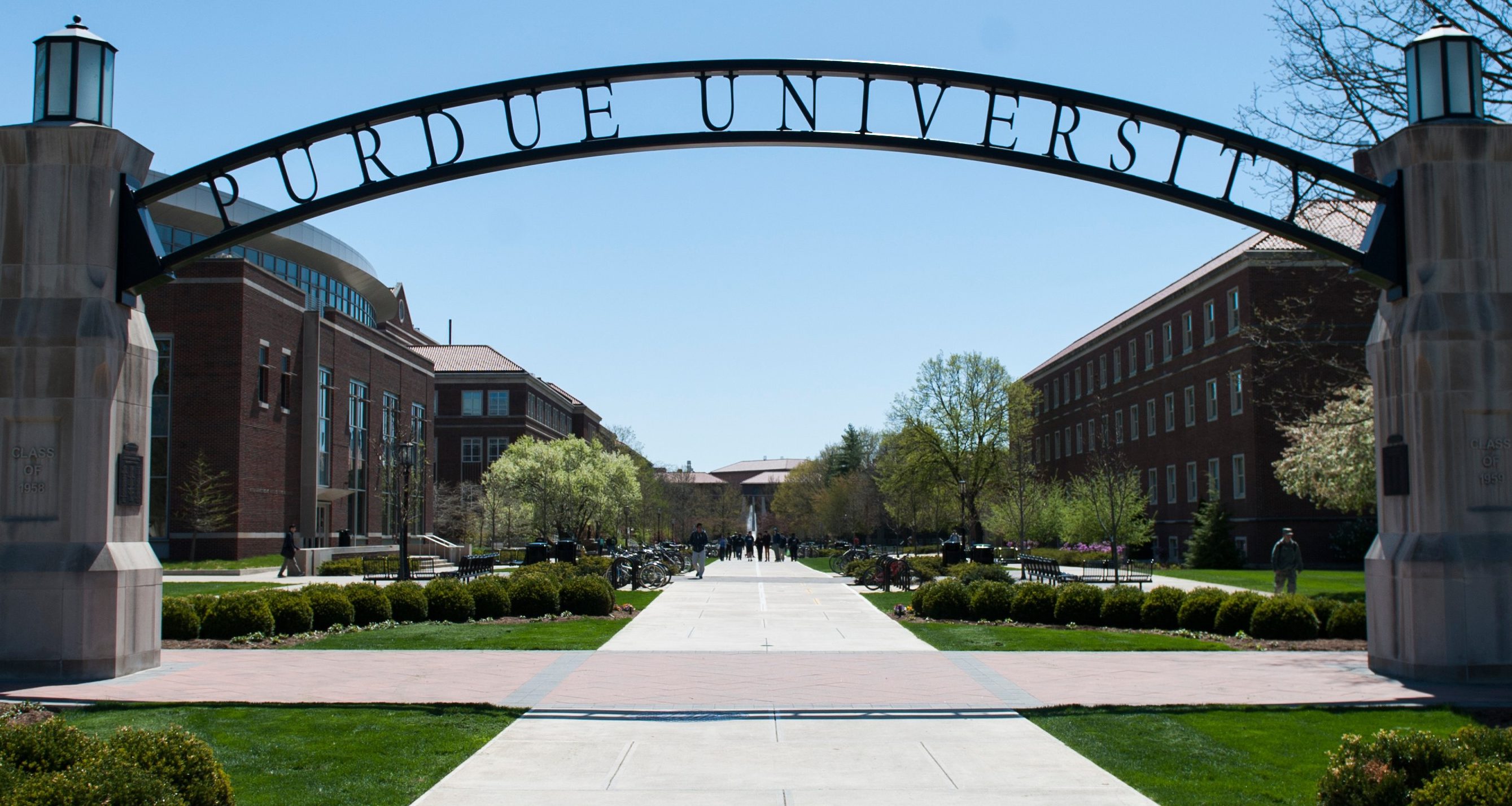
This past week I spent quite a bit of time on my Flagship board duties, both Flagship Enterprise Center and its relatively new corporate subordinate, Flagship Enterprise Capital.  For purposes of both brevity and clarity, we will refer to these not-for-profit corporations herein as Center and Capital, respectively.  Those of you not familiar with the Flagship entities and programs may want to see www.flagshipenterprise.org for a bit of history as well as current news.  [Full disclosure, I am on both boards of directors, serving on the audit committee and appointed by the Center board to chair the more recently launched Capital board.]

Perhaps one of the more successful and long running public-private partnerships, the entity that became Flagship Enterprise Center, Inc., was first incorporated in the State of Indiana in 2002 and headquartered in Anderson in 2005 at their newly constructed facility along I-69 at exit 22 (now exit 222). By expanding from that single facility, the initial partners—the City of Anderson and Anderson University—have established this high tech incubator, organization and its facilities as one that not only meets but exceeds its original promise envisioned at the time of incorporation.

This mission, or purpose, currently has as its core long-term economic development, the topic of my previous blog post. Underlying economic development, perhaps further defining what that means in this context, is creating, growing and attracting jobs.  Sound familiar?  Going a bit further into what Center is all about, the activities of encouraging the entrepreneurial and business spirit play a key role.  Execution goals and metrics to measure success fall within four broad categories:

  • Real Estate
  • Capital and Training
  • Partnerships
  • Finance

REAL ESTATE

The first foray into real estate was, as mentioned above, along the I-69 corridor when Center opened its first major facility. At 2701 Enterprise Drive in Anderson, IN, that location served for many years as Center corporate headquarters, incubation facility and centerpiece of the Certified Tech Park for such early startups as high tech energy storage firm Go Electric (http://goelectricinc.com/, now housed at Flagship East; more on that later) and digital marketing firm Element212 (https://element212.com/), among many others. The location also served as a springboard to welcome global firms such as Nestle USA (https://www.nestleusa.com/) and Greenville Technologies, headquartered in Japan (https://www.mtnaoh.com/MorirokuNetwork/GreenvilleTechnologyInc/Anderson.aspx), both firms needing temporary office space while they built manufacturing facilities near the Flagship Park.

Part of the time I spent last week was on a tour of Center-owned and Center-affiliated properties, demonstrating the fulfillment of the real estate goals. This tour included Center tenants and Center affiliates, both domestic and global:

CAPITAL AND TRAINING

The second goal of providing access to capital is a crucial one in Indiana. Entrepreneurs and those supporting them cite availability of capital as perhaps the single biggest challenge to both launch and growth. The gap that Center saw was smaller startups and scale-ups were not going to get the attention of VCs, nor were many of them quite established or ready to borrow from commercial banks. Hence, the advent in 2010 of the SBA microlending program, eventually branded as Bankable powered by Flagship (http://www.flagshipenterprise.org/get-a-loan/).

Now with its authorized portfolio of programs, the Bankable team can lend from $500 to $250,000. More importantly, the people behind the programs recognize some key factors about the clients and prospects they serve. Success is driven by more than just access to capital, and that is why training (or technical assistance) is such a vital part of the lending programs. In fact, there are tools and processes in place to evaluate loan prospects and let them know their chances of approval prior to application. If likely to have their loan application rejected, they can adjust some of the loan variables to improve their chances before even applying.

That pre-application screening, along with the expert business and technical assistance provided to the loan clients, is why the Bankable loan portfolio has experienced such remarkable success:

  • From zero to over 600 loans approaching $20 million in total lending since 2010
  • Perennially one of the top SBA lenders in the state and nationally
  • 90% of loans made from partner commercial bank referral
  • Loan default rate remains below 2%

Capital, recently authorized as a CDFI lender (https://www.cdfifund.gov/Pages/default.aspx), is starting small but growing rapidly to serve low income and other underserved markets in the four counties where it is currently authorized (Delaware, Hamilton, Madison and Marion). Plans are currently underway to explore options for expansion.

PARTNERSHIPS

The original partners along with the staff they hired and the early board members they appointed were visionary in that they knew they could accomplish more if over time they took three important steps:

  • Find additional strategic partners to support and help to pursue the mission
  • Secure additional sources of funding to advance the ability to pursue the mission
  • Boldly identify 21st century best practices to pursue the mission

If you go to the home page of the Flagship Enterprise Center web site, you will see the statement quoted below. It demonstrates how far those two original strategic partners have extended their reach and what has enabled their success.

“The Flagship Enterprise Center (FEC) is a regional incubator and advanced stage business center supported by the City of Anderson, Anderson University, Purdue University, IVY Tech Community College, the U.S. Small Business Administration (SBA), the Indiana Economic Development Corporation (IEDC), the U.S. Department of Commerce Economic Development Administration (EDA), and many others.”

It’s those last few words, “and many others,” that provide a window to the coming decades. Recent discussions with other municipalities, commercial lenders, prospective clients, government agencies, companies, and higher education institutions looking to emulate the success of Flagship may lead to more partnerships and even greater opportunities for success.

FINANCE

When managing a not-for-profit entity, whether as a board member or paid staff, there is a constant challenge to maintain what I call the balance between money and mission. In general, one can focus overly on the mission and lose sight of business concepts, quickly to go out of business. Some in the not-for-profit world lack business and finance expertise. With all good intentions, there can be a struggle with this unless they either hire such expertise or have strong board representation. Conversely, if too caught up with the “money” side of things, fund-raising or other financial aspects of the operation, to the detriment of the mission, those on the outside begin to lose faith in the organization and its leaders.

A quick review of the Flagship’s first three goal categories and accomplishments above, not to mention a few clients’ own words at http://www.flagshipenterprise.org/comments-from-our-clients/, this information speaks to the mission side. Longevity and expansion of both hard assets via real estate and expansion of microlending since 2010 all speak to strong fiscal management over the years.

Affiliation with both Flagship boards has been one of the most rewarding experiences of my life. I look forward to what the coming years bring and will always be grateful for the opportunity afforded me to be a part of this team.

Thank you for reading. Looking forward to your comments. The next entry will be “gateway” and a special “guest” appearance. Two “G’s” for the price of one! Watch for it!

#FlagshipEnterpriseCenter #FlagshipEnterpriseCapital #Bankable #entrepreneurs #economicdevelopment #microlending #SBA #entrepreneurship #boomers #millennials #PurdueUniversity

 

Uncategorized

Economic Development

Perhaps there is no more fitting topic for Labor Day weekend than job creation. That is what economic development is all about, at its essence.  While that isn’t part of my job title, it is one of the most important focus areas of what I do, and I have been fortunate to learn by observing some of the best in the business.  One of my primary responsibilities is using the people, programs and intellectual capital of my employer to advance the economic prospects of the community, region and State of Indiana. Therefore, it is crucial that I have some understanding of economic development concepts and practices.

When I first moved home to Indiana, I heard a lot of talk in Anderson about the importance of having attracted Hoosier Park and the Nestle plant to the area. That talk often turned to speculation about the “next” Hoosier Park or Nestle, leading me to think that attracting the big employers from outside the state—or even the U.S.—was what economic development was all about.  Seems many of my new neighbors felt the same way.

Over the course of the next few years, I began to learn that attracting new firms from outside the area, while important and a cause for celebration, was not enough to keep any region economically healthy. The existing businesses needed to grow and the area needed a climate that was supportive of entrepreneurs.  As a result, a threefold concept I dubbed Economic Development 101 emerged:

  • Attract new companies and jobs from outside
  • Grow existing firms from within and keep them healthy
  • Foster a climate of entrepreneurial growth and support

The attraction of a company from outside is often what garners the big headlines, resulting in a ribbon-cutting with the mayor and Chamber of Commerce in attendance. They are also often the ones with the biggest pricetags in terms of incentives using taxpayer dollars, with both proponents and detractors. I will leave the debates of the pros and cons to the experts, as this is too complex for a brief discussion.

Existing business owners sometimes wonder why they don’t receive the incentives (tax abatements and such) that the newcomers are granted to invest and create jobs. If they are willing to invest like amounts of capital and create a similar number of new jobs, they argue, should they not be granted the same treatment? Perhaps so, as growth from within can be some of the strongest and most sustainable growth. Combined with a strong Chamber of Commerce that serves the needs of this existing business audience, this second tier is a crucial part of the local economy and tax base.

Looking at that third tier, over the past few years there has been a surge of interest in people of all ages in starting companies. Without a robust support system, however, failure rates can be high. Some believe that failure rates are as high as 90%; however, a 2017 study shows that as many as 80% of newly launched businesses survived the first year, half survived five years and one-third were still in business after ten years (https://best4businesses.com/new-business-survival-rates-2017-sba-statistics/). This may be because we are getting smarter about how we support these entrepreneurs—everything from training to access to capital and professional services. And those no longer in business may have been sold, merged or acquired by other firms.

In recent years, the profession and practice of economic development has expanded from a focus on attracting/expanding companies along with the investment and jobs they bring. That expansion encompasses what I call “the three P’s” as outlined here:

  • People
  • Place
  • Policy

In terms of people, as those making decisions about location and/or expansion, it must be apparent that the location has the talent available to support the hiring needs of the new and/or expanded jobs created. If not, there must be a plan for workforce development and partnerships with educational entities at all appropriate levels. Workforce development, a topic for another entire discussion, is always of concern.

Priority of place, often termed “livability,” has taken on greater focus in recent years. In fact I have even heard (although haven’t found one yet in the Purdue students I talk with) that some college grads will first decide where to live and then look for a job. This is easier to believe in an environment of very low unemployment; not so much if and when that situation reverses itself. That said, things like walkability, public transportation, cost of living, leisure amenities, quality of local schools and so forth all play a role in this evaluation factor.

All of these economic development activities and decisions play into a municipality’s, region’s, and state’s success in economic health and expansion. Even lack of specific policies will tell site selectors and those looking for areas to locate how serious an area is about working with them. Elected and appointed government officials who are the best at this, in my opinion, understand the delicate ecosystem of these piece parts and work together with the professionals in each to best effect.

Next time you, especially as a layperson, hear about an economic development project, see if this model helps. Is it:

  • Bringing in a firm from the outside
  • Growing a business from within
  • Providing a supportive climate for entrepreneurs
  • Including one or more of the three “P’s”
    • People
    • Place
    • Policy

#economicdevelopment #workforcedevelopment #boomers #millennials #entrepreneurship #entrepreneurs

Uncategorized

Dedication

BARB’S BOOMER BLOG

MUSINGS FROM THE MILLENNIAL WORLD #3


Ever been called stubborn? I sure have, but I prefer to consider it persistent.  When one applies that particular personality trait, whatever you call it, in a positive direction toward a goal or cause, consider it dedication. Over the weekend, several examples of dedication were in evidence.

On Saturday many dedicated people came together to raise funds for Alternatives, Inc. (See https://www.alternativesdv.org/ for details).  Ending domestic violence is one of those causes that volunteers, staff, donors, models (male first responders and board members) and even local celebrities serving as co-emcees rallied around the cause while having fun at this annual event.  It was obvious that a lot of effort over many hours, weeks and months had gone into planning this event, and it would not be too surprising to learn that 2019 planning might already be underway.

However, like with most such organizations and the causes behind them, it is the clients they serve that drive the dedication of those we saw there that day and throughout the year. We heard from two clients, one via a video message and one in person.  As one so aptly put it, “Don’t call me a victim.  I’m a survivor.”  Based on the story she told, she has done far more than survive; she has thrived and will continue to do so.  With the help of those who supported her throughout her journey, it appears she may be stubborn, persistent and dedicated to her goals as well as to the things and people that are important to her.

After arriving home that evening, I learned that our nation had lost one of its great patriots, Sen. John McCain. This is not a political discussion, but rather one of character traits and an observation of how those traits appeared to have driven him throughout his service to country.  As I listened to people describing Sen. McCain’s military and legislative journey, I heard several describe him as “stubborn” and it made me smile through my tears.  Reflect for a moment on what that stubbornness allowed him to endure in the Hanoi Hilton.  It allowed him to survive what most of us cannot even imagine, enabling him later to hold his head high upon his return, knowing he did not take the early release offered to him once his captors learned he was the son of U. S. military brass.

As his military career came to an end because of his injuries endured under torture during captivity (reportedly his decision), he turned to elected office as his chosen means of continued service. He spent the rest of his life serving the State of Arizona, first in the House of Representatives and then in the U.S. Senate.  It was mainly as a Senator from Arizona and as a candidate for President that I heard him described as “stubborn” over the weekend.  He did not always toe the party line, did not always take the advice of his staff, but reportedly followed what his heart, mind, conscience and best judgment dictated. Throughout a lifetime of dedication to country, we owe him thanks for being such a shining example of this attribute.

Here is the broader lesson we take from these local and global examples of dedication. It is the concept that one can transition something that could on the surface seem to be character flaws into traits and attributes that are positive.  As I often say, “Use your powers for good and not evil.”  If Sen. McCain was “stubborn” then next time someone describes me that way, I will consider it a compliment!

Here is the way forward in a broader sense for each of us. We all have a negative attribute or two, perhaps not rising to the level of a character flaw, but not so great nevertheless.  However, we can try to think of ways to apply those attributes in positive ways like turning stubbornness to persistence to dedication!

Thanks for reading. As always, looking forward to your comments, suggestions, and of course connections—whether in person or via social media!

Uncategorized

Connections

BARB’S BOOMER BLOG

MUSINGS FROM THE MILLENNIAL WORLD 2.0


When making an in-person presentation or advising others of a good approach, I sometimes say, “Tell your audience what you are going to tell them, tell them, and then close with a summary of what you told them.” Typically, a message repeated three times stands a better chance of being memorable.  Another bit of advice for being memorable that I have learned over the years, not entirely original, is a nod to the late author Sue Grafton—she of the book titles “A is for . . . “ and on through whatever letter she reached until she passed away, not quite getting to Z.  I never read her books, but I may start after my next retirement sometime in the future.  Yes, you gotta have a gimmick.

I often wondered how she got her literary inspiration in alphabetical order. While it is in fact somewhat of a gimmick, it is memorable and I am borrowing it as a roadmap to follow for my journey through the blogosphere.  While the first topic was accountability followed by break—as in, I took one to learn more about the craft of blogging, hoping not to repeat some of my rookie mistakes—the topic of this issue is connections.  With that three-pronged approach in mind, let me tell you about some great ways over the course of my Boomer experience in the Millennial world to make connections work.  “Networking” is not a dirty word, you never know what kind of benefit may accrue, introverts can do it, and you just need a plan and a purpose.

An event in downtown Indy late last week spending a few hours with people I have known for a number of years as well as having the opportunity to make some new professional contacts got me to thinking about this. In today’s world, it is difficult to be successful without being good at making connections with others, whether directly or indirectly.  While reconnecting with a business acquaintance and local tech entrepreneur that I had not seen for quite some time and getting an update from him, I learned three important things:

  • his company had recently expanded and moved to a new location
  • he and another local tech entrepreneur that I introduced him to quite some time ago had expanded their business relationship very successfully, and
  • from that initial introduction he had made perhaps as many as six or seven other connections

Working for a major university, people often assume I teach. Indirectly, I suppose I do, but not in the classroom and not in a way that anyone gets university credit. My focus is more on economic development and connecting business, industry and entrepreneurs with the capabilities of my employer. The most effective way to do that is by getting out to events much like the one just described and identifying the business leaders that will benefit from connecting with the great academic and business minds I represent. When I attend such events, as I have for several years now, I have developed an approach that has served me well.

Like with any endeavor, preparation is everything. Determine in advance your objectives for attending. Have some sense of who else might be there, either specific individuals or types of individuals. Target three to five contacts to meet and plan something to talk about in advance. Follow up with a meeting request if appropriate, or set a time to meet before you part.

In summary, whether you are just beginning your career or are a seasoned pro, connecting with others is key to your success and happiness. Introvert or extrovert, you can do this! Here are your keys to being an expert in the art of face-to-face connections:

  • plan ahead and have an objective—know why you are there
  • pick three to five people to connect with in a meaningful way rather than seeing how many business cards you can hand out and collect
  • follow up after the fact with a meeting request, note, email, or connection on social media

BONUS BIT OF ADVICE: never use the standard LinkedIn connection request! Always add a little bit of personal verbiage. Something like “I enjoyed meeting you Monday evening and talking about . . . . Please accept my connection request.” So much classier and more memorable.

Thanks for reading. As always, looking forward to your comments, suggestions, and of course connections—whether in person or via social media! Let me know what you think should be up next. Your favorite d-word? I have one in mind, but will consider yours.

Uncategorized

The Journey Begins


        2018, ISSUE #1  WELCOME TO MY BLOG!  Comments welcome.

Join me in keeping great Indiana talent in Indiana.

There’s no place like home.   — Dorothy Gale (in the Wizard of Oz)


BARB’S BOOMER BLOG

MUSINGS FROM THE MILLENIAL WORLD

What makes for a good blog that people will read? Guess I’m about to find out!  As a Boomer who hates labels and generalizations about people that others want to tag with those labels, I am out on a limb here with the title and subtitle of my first blog entry.  In the dark ages (those years that begin with 19, not 20), when I started my career, I was challenged by the way women were treated, labeled and categorized.  OK, still an issue and done to death, so on to something else.  Suffice it to say that nobody speaks for “all women” because we are not all alike any more than any other labeled group is homogeneous.

As a Boomer learning to pick up new tech (new to us; something others grew up with and learned from the smart devices in hand), I was a bit of an early adopter of social media. Had to be, forging a second career after early corporate retirement a decade ago and working with college students.  Just a bit of snow in the forecast and my phone would start ringing with students wanting to know whether classes were going to be cancelled.  Enter Facebook and Twitter, primary use for Purdue College of Technology (now Purdue Polytechnic) in Anderson and Richmond to directly communicate with students, faculty, staff and others.

Experience on these two social media platforms came from personal accounts, followed not long after by an account on LinkedIn. These three personal accounts have been the foundation of my social media use since posting my first Facebook status—something on the order of “The fastest growing user group on Facebook is women in their 50’s.  Who knew I was in such a trendy demographic?”

So on to the real topic of this first issue, a bit of burying the lead. Even though I had identified blogging as something I wanted to add to the mix, and in fact had even written it as a goal or put it on a to-do list more than once (things some “experts” tell you leads to success—not for me apparently), it never happened.  I had a WordPress account, with nothing in it and I had noodled around with a few topical ideas, mostly during my drive time.  However, until today I never put pen to paper—or in this case, fingers to keyboard.

So what made the difference? If you managed to stay with me this far, here’s real topic of this first issue.  It’s accountability.  I attended a StartUp Ladies Study Hall led by Metonymy Media CEO Ryan Brock, topic—you guessed it—blogging.  Afterwards, I told him and two other friends, Darcy Lee (also of Metonymy Media) and Angie Hibner (Respire Strategy) that they were my accountability team.  But the serendipitous meeting today that really put me over the accountability edge was running into Mike McCann (Pepper Construction of Indiana).  He was mentoring a young man and I mentioned the importance of accountability in meeting your commitments and my long-delayed blog.

So to my accountability team, thank you for motivating me to do what I have been talking about for so long (I will not confess how long). Thanks to Ryan for a great session (the quality and contents of this blog do not reflect on him or his company—I am a total beginner).  Please critique me mercilessly as well as provide any suggestions for future content.  “Shut ‘er down” might be a bit harsh after my first attempt, but maybe after three or four if I don’t improve I will entertain that suggestion!

Connect with me on Facebook, Twitter and LinkedIn.  Mention the blog if you haven’t met me face to face so I know to accept the connection.  Thanks for getting this far, and have a great day (or night, if you are a night owl).